- 22:29 'Face' discovered on comet
- 01:42 Apple wants to patent 'Siri for Mac'
- 01:38 Rosetta space probe on a unique travel destination
- 01:33 Created Origami Robot for $ 100
- 14:56 Intelligence test for Chimpanzees: Smart parents, smart kids
- 16:01 News - Astronomers have discovered Icy world in a binary star system
- 15:07 News - Yahoo launched its own Youtube
- 15:02 News - The hepatitis C virus and the high cost of medicine heals the sick


Animal Pompeii in Northern China
Huge ash clouds in volcanic eruptions have preserved dinosaurs, mammals, and many other creatures in what is now northern China before about 130 million years ago.
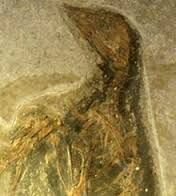
This had probably been torn by so-called pyroclastic flows into surrounding waters , report Chinese and U.S. researchers in the journal " Nature Communications " . The animals and plants are therefore similarly well received as the victims of the Vesuvius eruption in 79 AD in the ancient city of Pompeii .
For the creatures of northern China before 130-120 million years ago from the Yixian and Jiufotang - rock formations, there is a fixed term : Jehol biota. Numerous , often obtained with many tissue structures remains of plants , insects, fish, frogs , mammals and dinosaurs have been discovered in the area.
The deposit belongs to the most impressive at all from the Mesozoic , the researchers write to Baoyu Jiang from Nanjing University in Jiangsu Province . Water and terrestrial species were to be found there in the same soil layers . The cause of the mass extinction would have long been regarded volcanic eruptions. However, it should have been unclear exactly what happened and why the remains are so extraordinarily well preserved.
The researchers have now studied 14 bird and dinosaur fossils of various particularly important sites in the region and the sediments therefore more accurate. All remains were enclosed by a thin layer of volcanic ash , they report. In addition, they would have had signs of charring . This suggests that the animals in pyroclastic flows were killed , extremely hot clouds of solids and gases that can race down the slope during the eruption of a volcano.
Yorumlar()


İlgili Haberler
- 'Face' discovered on comet
- Apple wants to patent 'Siri for Mac'
- Rosetta space probe on a unique travel destination
- Created Origami Robot for $ 100
- Intelligence test for Chimpanzees: Smart parents, smart kids
- News - Astronomers have discovered Icy world in a binary star system
- News - Yahoo launched its own Youtube
- News - Space and History Photo: Communication Technology Satellite
- News - iPhone vs. HTC One vs. Samsung Galaxy spec sheet comparison
- News - HTC One (M8) running iOS would make a fantastic iPhone
Son Eklenenler
- 'Face' discovered on comet
- Apple wants to patent 'Siri for Mac'
- Rosetta space probe on a unique travel destination
- Created Origami Robot for $ 100
- Intelligence test for Chimpanzees: Smart parents, smart kids
- News - Astronomers have discovered Icy world in a binary star system
- News - Yahoo launched its own Youtube
- News - The hepatitis C virus and the high cost of medicine heals the sick
- News - Space and History Photo: Communication Technology Satellite
- News - iPhone vs. HTC One vs. Samsung Galaxy spec sheet comparison
Çok Okunanlar
- Yahoo plans return to search engine projects 'Fast Break' and 'Curveball'
- New study confirms that: The male Y chromosome is retained
- How To Close Down Background Applications On iOS 7 For iPhone and iPad ? LEARN FROM VIDEO is HERE!
- Epic Trolling News: Samsung pays Apple $1 Billion sending by 30 trucks filled with about 20 billion units of 5 cents coins for patent litigation.
- Scientists discover a huge reservoir of fresh water Under Greenland Ice Sheet
- The Crab Nebula has a noble gas molecules do not occur in space, NASA says
- More fish in the darkness of the ocean 10 times more than previously thought
- WHAT DIFFERENCES TO SAMSUNG GALAXY S4 AND GALAXY S4 MINI, WHICH ONE DO YOU CHOOSE ?
- New footage of Felix Baumgartner space jump will leave you gasping for air
- Hawking says: 'Black holes do not exist'